

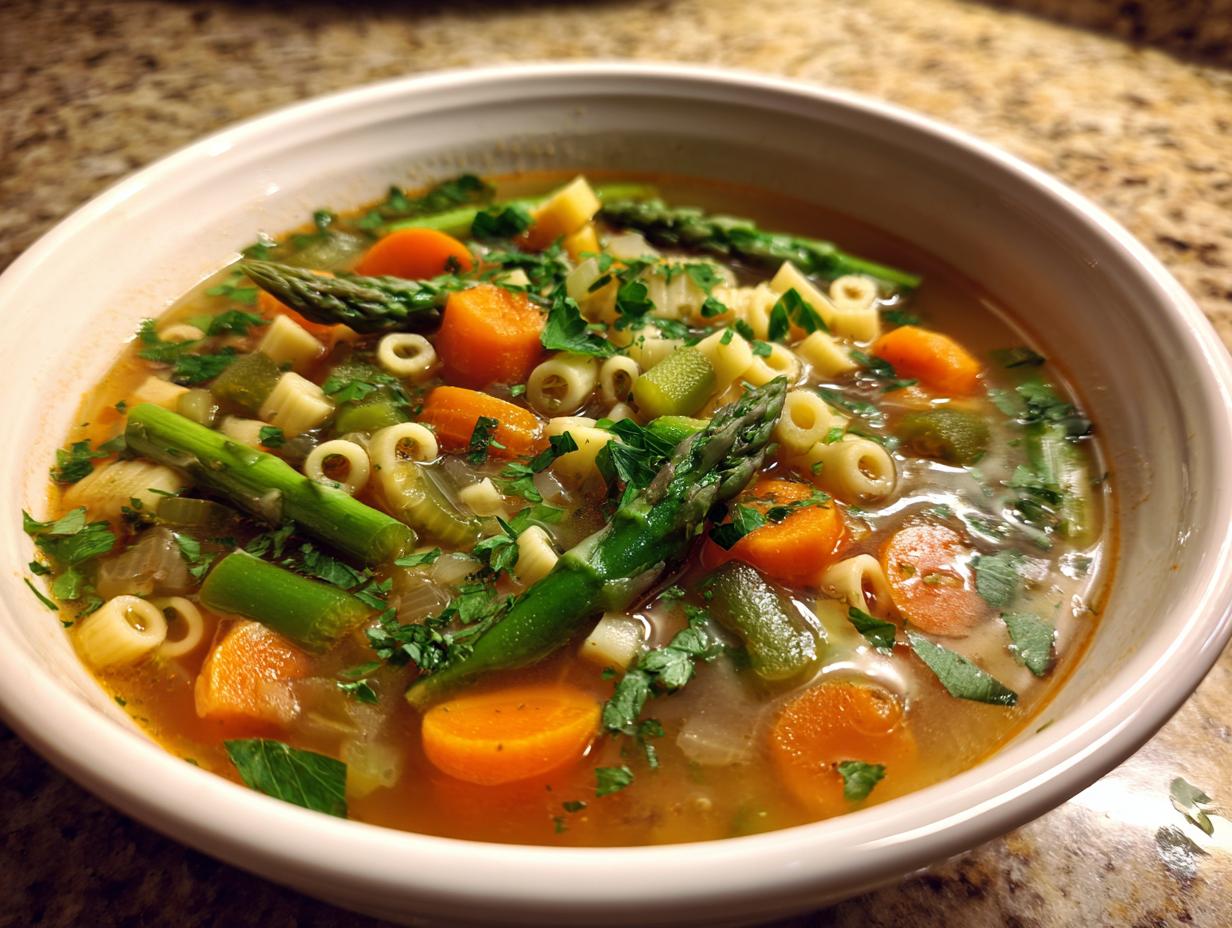
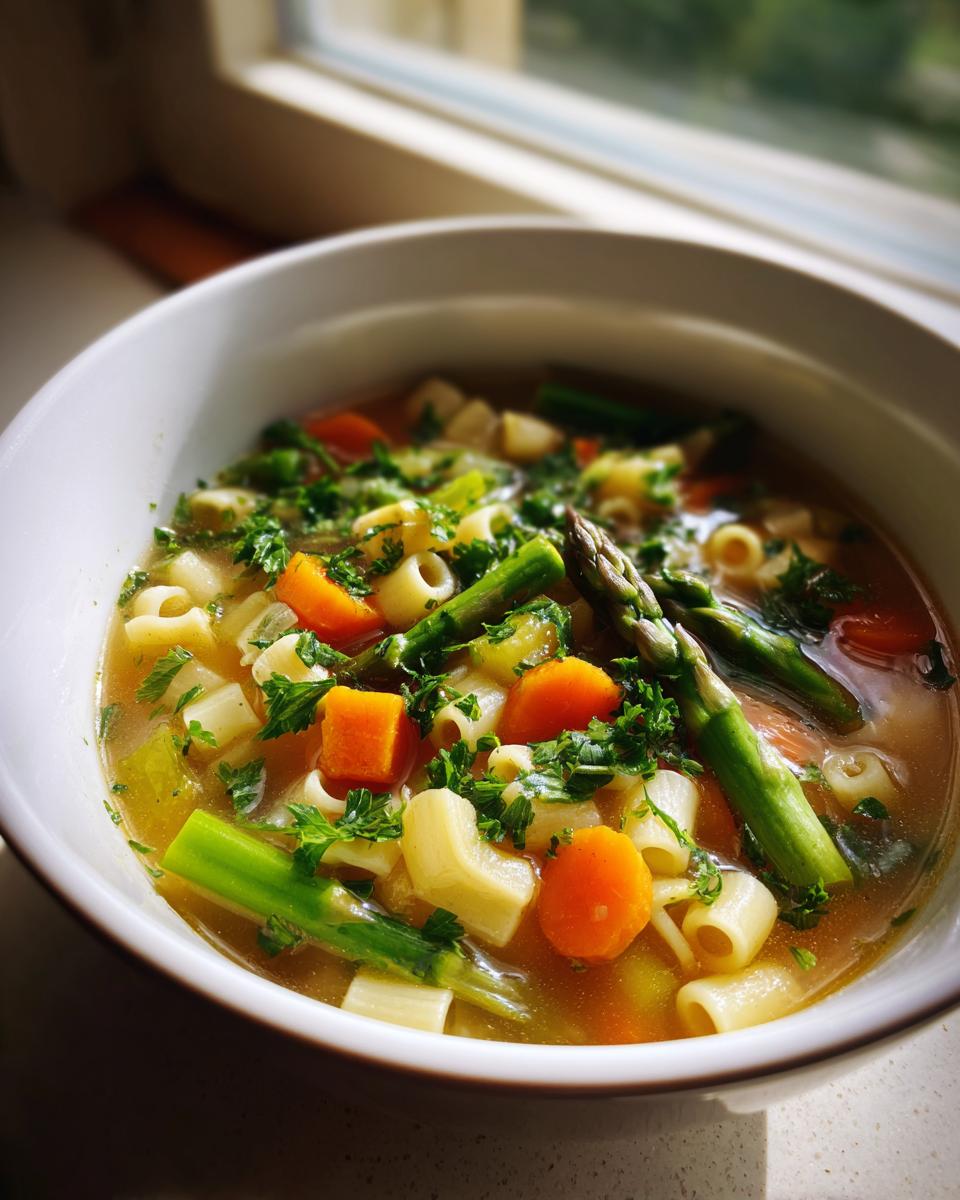
Oh my goodness, when those first bright green shoots start showing up at the market—that’s when I feel like I can finally breathe again after winter! If you’re anything like me, you want to celebrate that crisp, fresh flavor right away, but you need something that won’t weigh you down mid-week. That’s exactly why I’m obsessed with this Spring Vegetable Minestrone. It is the definition of clean eating fuel in one gorgeous pot! We’re talking clear broth, tender asparagus, sweet peas, and earthy leeks all coming together in under 40 minutes. Here at HearthBite, Sarah Miller focuses on simple, nourishing home cooking that you can trust, and this recipe proves that healthy doesn’t mean complicated.
- Why You Will Love This Spring Vegetable Minestrone
- Gathering Ingredients for Your Spring Vegetable Minestrone
- Step-by-Step Instructions for Perfect Spring Vegetable Minestrone
- Tips for Making the Best Spring Vegetable Minestrone
- Making This Spring Minestrone a Vegan Soup
- Serving Suggestions for Your Spring Vegetable Minestrone
- Storing Leftovers of Your Spring Vegetable Minestrone
- Frequently Asked Questions About This Seasonal Produce Soup
- Nutritional Estimates for Spring Vegetable Minestrone
Why You Will Love This Spring Vegetable Minestrone
Honestly, this soup is my go-to when I need something nourishing fast. It truly fits right into that clean eating vibe we all aim for when the week gets busy. You get all those wonderful nutrients without feeling weighed down after you eat. And because it’s practically magic, you’ll spend more time savoring it and less time cleaning up!
Perfect for Clean Eating Mid-Week Wellness
The broth is deliberately kept light and clear, focusing on the flavor of the actual vegetables rather than heavy cream or starches. It’s everything you want in those light dinner recipes—bright, fresh, and full of vibrant color. It’s satisfying because it’s packed with fiber from all those seasonal veggies, not filler!
One-Pot Simplicity for Easy Cleanup
I absolutely dread a sink full of dishes, especially on a Tuesday night. That’s why this recipe being a true one-pot meal is such a huge win. Everything simmers together, which means clean-up is about five minutes flat. You can find more of my favorite quick and easy dinner recipes right here if you love speedy weeknight cooking too!
Gathering Ingredients for Your Spring Vegetable Minestrone
Okay, let’s talk shopping! For this *Spring Vegetable Minestrone* to really sing, you need to hit up the farmer’s market or the best produce section you can find. This recipe is designed around those beautiful, crisp May flavors, so fresh leeks, asparagus, and sweet peas are non-negotiable. I’ve laid out the exact amounts below so you don’t have to guess. Precision really matters here because we aren’t masking the vegetables with heavy flavorings; we want their natural taste to shine through in this light broth.
Remember what I always say? Good ingredients make good food—that’s the secret to reliable home cooking. If you’re looking for more ways to get those beautiful greens in your life, check out some of my healthy lunch recipes too!
Ingredient Notes and Substitutions for Spring Minestrone
Before you start chopping, I have to give you the major warning about the leeks. They are notorious for trapping grit right up in those layers! You really need to clean a sliced leek like you mean it—slice it thinly, then dunk it in a big bowl of water, swishing it around until the water runs totally clear. It seems tedious, but trust me, nobody wants sandy soup!
Now, about the pasta: ditalini is perfect, but if you need to keep this gluten-free, ditch the pasta altogether and swap in half a cup of rinsed quinoa instead. It cooks right in the broth and keeps that wonderful texture without messing up the timing too much!
Step-by-Step Instructions for Perfect Spring Vegetable Minestrone
This is where the magic of a good one-pot meal really comes together! Since everything goes into one pot, technique matters a little more to ensure every vegetable cooks perfectly. Follow these steps closely, especially the timing, and your *Spring Vegetable Minestrone* will taste incredible. Don’t rush that initial sauté; it builds the whole flavor backbone!
Sautéing the Aromatics for a Flavorful Spring Minestrone
First things first, get a nice big Dutch oven or heavy pot over medium heat and drop in that tablespoon of olive oil. Now, add your prepared leek slices—and remember, since you washed them so well, you don’t have to worry about grit! Toss in the carrots and celery too. You want these three to cook down until they are just starting to soften, which takes about six to eight minutes stirring gently. Right after that, slide in your minced garlic. Garlic burns fast, so give it just one minute until you can smell that wonderful fragrance, and then we move on!
Simmering the Broth and Pasta in Your Vegetable Soup
Time to build the base! Pour in your six cups of broth and the cup of water. Add your dried thyme and rosemary—these herbs feel so much like spring, don’t they? Bring that whole mixture up to a rolling boil. Once it’s bubbling happily, you can add your small pasta (ditalini is my favorite!) and the can of diced tomatoes, undrained. After you add those, immediately drop the heat back down so you maintain a steady, gentle simmer. Cook according to the pasta box directions, usually about eight to ten minutes, until that little pasta shape is almost tender—we call that *al dente*.
Adding the Delicate Spring Produce to the Spring Vegetable Minestrone
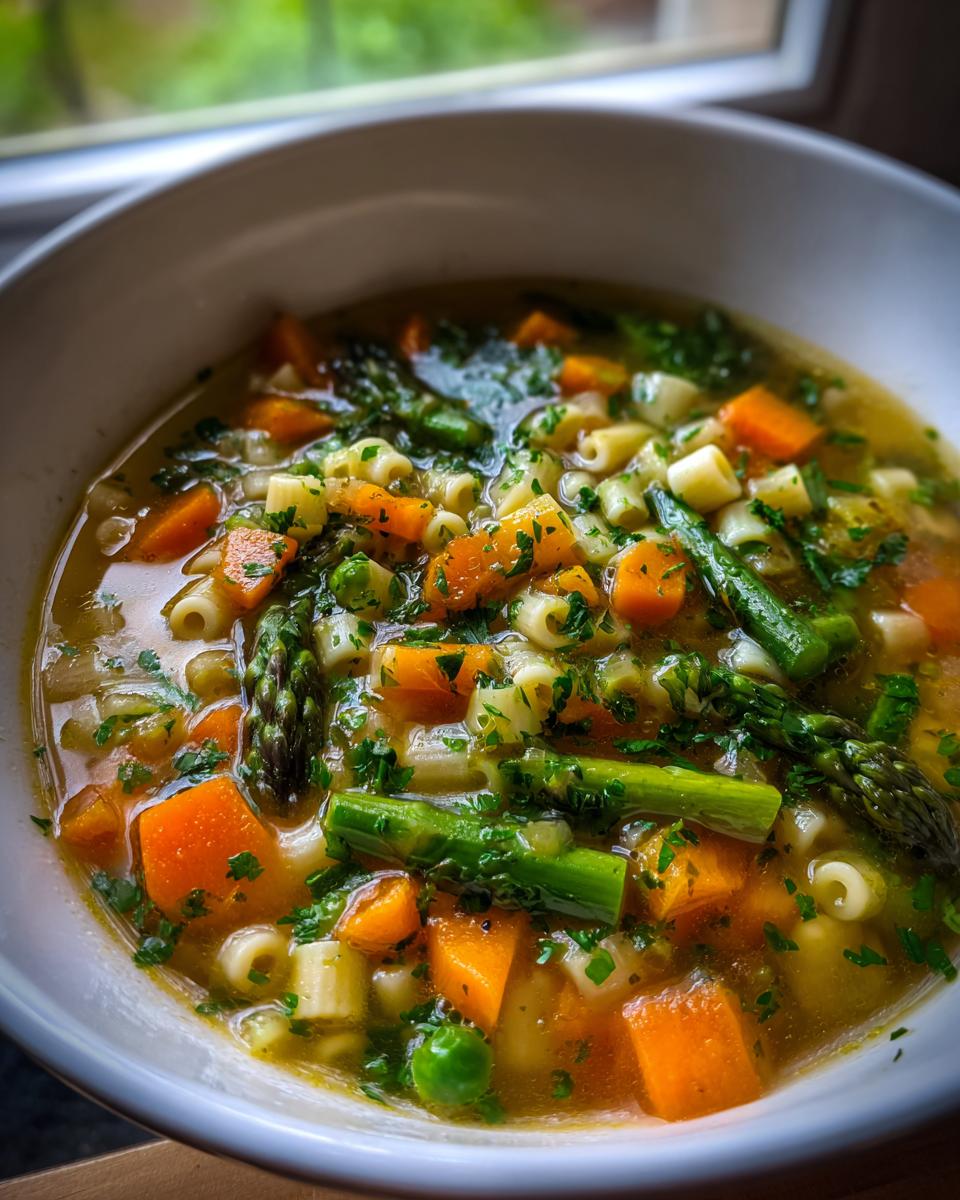
This is the most important timing step for your *seasonal produce soup*! Once the pasta is nearly done, stir in your chopped asparagus spears and those bright little peas. Then, you only simmer for about three to five more minutes. I can’t stress this enough: you want them *tender-crisp*. If you let them go much longer, they turn dull and mushy, and we want that gorgeous spring green color in our *Spring Vegetable Minestrone*! When they’re done, kill the heat, stir in the fresh parsley, taste for salt and pepper, and dinner is served.
Tips for Making the Best Spring Vegetable Minestrone
Even though the instructions are straightforward for this *Spring Vegetable Minestrone*, I have a few little secrets I’ve picked up over the years to really elevate it past just being “good soup” to being “that soup everyone asks for.” These little tweaks make a huge difference!
First, let’s talk broth because this is critical for keeping it light. If you use store-bought broth, avoid the darker, beef-based types. We want a really clear, pale vegetable broth. Using a high-quality homemade vegetable broth is the number one way to ensure your final soup looks clean and lets those spring vegetables shine. Diluting it slightly with water, like we do in the recipe, keeps that clean eating profile perfect.
Second, don’t use frozen asparagus if you can help it! Fresh asparagus has a superior snap when cooked for just a few minutes. If you do use frozen peas, add them straight from the bag without thawing. They usually take the same time as the asparagus and help cool the soup down slightly so you don’t accidentally overcook the pasta.
And finally, salt! Because we are intentionally keeping this recipe lighter, you need to taste it right at the end after everything is cooked. Fresh parsley, herbs, and tomatoes all release flavor at different times. Don’t be shy with the salt and pepper when you taste it off the heat. That last adjustment makes the entire *Spring Vegetable Minestrone* pop!
Making This Spring Minestrone a Vegan Soup
The best part about this whole amazing dish? It’s naturally built for everyone at the table! When I wrote up the notes for this *Spring Vegetable Minestrone*, I made sure there wasn’t any hidden meat stock or secret dairy lurking in the ingredients. We made this to be a truly wonderful, clean eating vegan soup right out of the pot. You won’t find any heavy creams here, just straight-up delicious vegetables and herbs.
This recipe uses vegetable broth, fresh veggies, and herbs, so it fits perfectly into any clean eating plan. But, because it’s so light, sometimes people ask me how they can make it a bit heartier if they’re serving it after a long day. If you’re looking for a boost of plant protein but want to keep the integrity of this *Spring Vegetable Minestrone*, here’s my easy trick.
Right before you add the asparagus and peas in Step 6, toss in one 15-ounce can of rinsed and drained cannellini or great northern white beans. They hardly change the flavor, but they add a fantastic creaminess and a solid dose of protein to make this an even more balanced meal. You can see more of my favorite ways to approach plant-based baking and cooking over here at vegan pumpkin pie recipe easy creamy—different recipe, same philosophy!
Serving Suggestions for Your Spring Vegetable Minestrone
Since this *Spring Vegetable Minestrone* is designed to be a light dinner recipe, it shines best when paired with something equally simple and fresh. You don’t want to weigh down all that effort we put into keeping the broth clear and the vegetables crisp!
My absolute favorite way to serve it is alongside a thick slice of truly crusty bread. Nothing beats dipping that perfectly crunchy crust into the light broth to soak up all the flavor from the thyme and rosemary. If you’re feeling ambitious—and I highly recommend it—you can make my go-to easy crusty Italian bread recipe; it just takes a little time, but the payoff when serving this soup is huge.
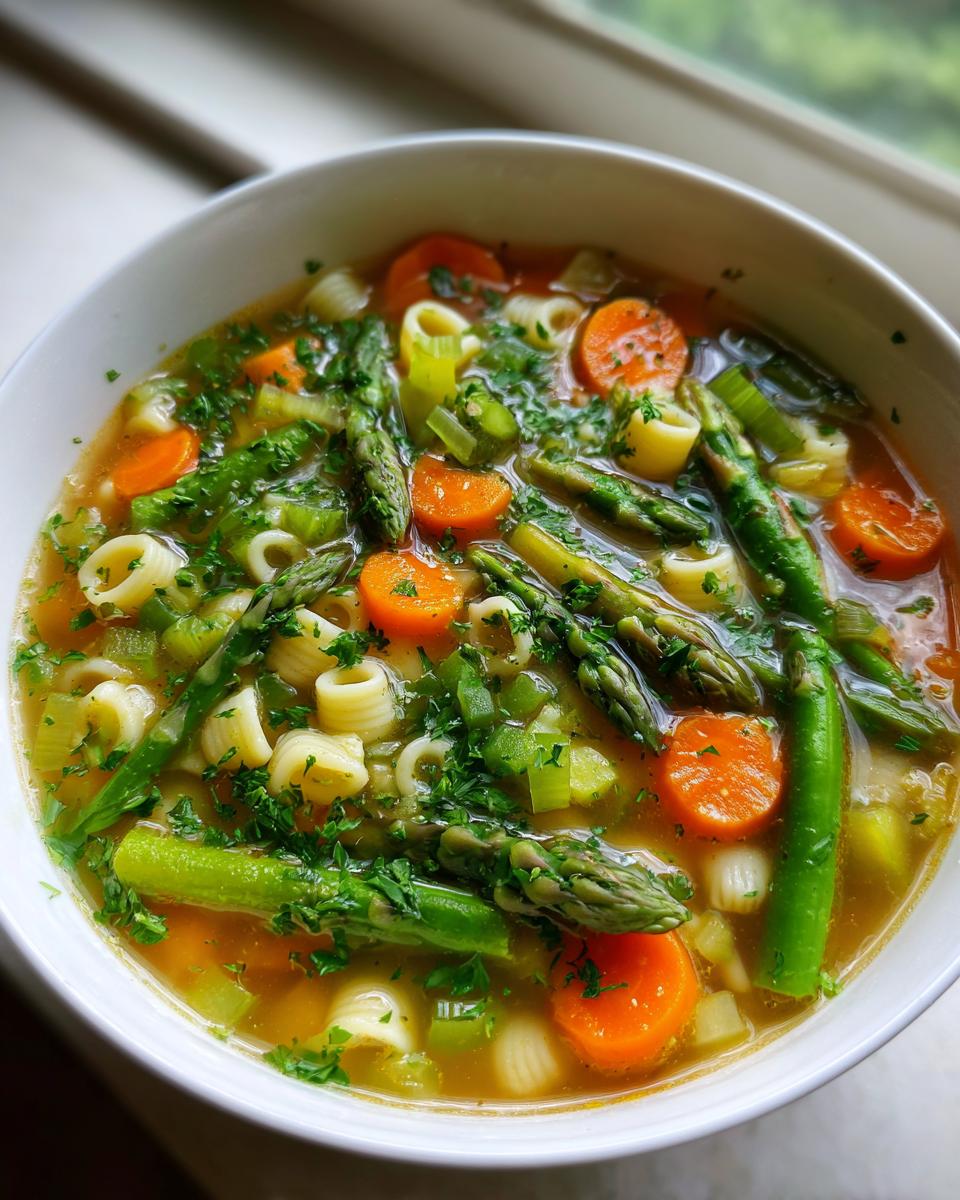
If you aren’t feeling the bread vibe, keep it simple with a small, bright side salad. Maybe just some fresh arugula tossed with a squeeze of lemon juice and a drizzle of good olive oil. It complements the freshness of the minestrone beautifully. This keeps the whole meal feeling clean, light, and perfectly in season. That’s the trick to enjoying a full meal without feeling sluggish!
Storing Leftovers of Your Spring Vegetable Minestrone
Listen, this *Spring Vegetable Minestrone* tastes just as good the next day, maybe even better as the herbs really get to know each other overnight! You can definitely refrigerate it, which is great for quick lunches. Store whatever you don’t plan on eating right away in an airtight container—I usually aim for about 3 to 4 days just to be safe.
Now, here’s the deal you need to know, just like I mentioned in my notes: because we cook the pasta right in the broth, it continues to absorb liquid as it cools and sits in the fridge. When you reheat it the next day, that little pasta might be a bit too soft, maybe even a little bloated. It’s still delicious, but it won’t have that nice, firm bite it had straight from the stove.
If you know you are making a huge batch and want perfect leftovers, here’s what I do: cook all the vegetables, broth, and seasonings completely, but leave the pasta and asparagus/peas out! Store the vegetable base in the fridge. Then, when you reheat a serving, just boil a small amount of water, cook a single serving of your pasta until al dente, and stir that into your hot vegetable broth base. It keeps your *Spring Vegetable Minestrone* looking and tasting freshly made every single time!
Frequently Asked Questions About This Seasonal Produce Soup
I get so many questions about tweaking recipes, especially when trying to stick to a clean eating schedule, so I wanted to cover a few things right here. This *Spring Vegetable Minestrone* is super flexible, but knowing how to manage the pasta and broth can really help!
Can I freeze the Spring Vegetable Minestrone?
You absolutely can freeze this *vegetable soup*! I mentioned this in the storage tips, but I want to reiterate: freezing works best if you handle the pasta separately. The broth and vegetables freeze beautifully together, but the little ditalini noodles tend to get way too soft when you thaw and reheat them. If you already cooked them together, don’t worry—it’s still perfectly safe to eat, it just loses some texture. For best results next time, cook your pasta separately, cool it, and freeze the soup base without it, adding the cooked pasta back in just before you reheat a bowl.
How can I make this vegetable soup more filling?
This recipe is intended to be a wonderfully light dinner recipe for a gentle weeknight cleanse, but if you’re hungrier, adding protein is easy! As I talked about before, adding a rinsed can of white beans (cannellini are my favorite) adds bulk and staying power. You can also slightly increase the amount of pasta if you don’t mind sacrificing a little bit of the broth clarity. Alternatively, if you want to keep it purely a *seasonal produce soup* without pasta or beans, just double up on the carrots and celery, and go a bit heavier on the herbs!
If you are looking for more ways to keep meals satisfying while staying light, you might find my section on gluten-free recipes useful too, as those often focus heavily on whole vegetables and grains for texture!
Nutritional Estimates for Spring Vegetable Minestrone
I always get asked about the numbers, especially since this *Spring Vegetable Minestrone* is such a hallmark of clean eating. It’s so great to know you’re fueling your body with something wholesome that tastes amazing! Because we keep the broth light and rely on whole vegetables, the numbers stay nice and low, which makes this a perfect light dinner recipe.
Keep in mind these figures are estimates based on the ingredients I listed and standard serving sizes. Your actual numbers might look a little different depending on the brands of broth or oil you use, but this gives you a fantastic baseline for planning your meals.
- Serving Size: 1.5 cups
- Calories: 185
- Fat: 4g (Saturated Fat: 1g)
- Carbohydrates: 30g (Fiber: 7g)
- Protein: 7g
- Sugar: 6g
- Sodium: 450mg
- Cholesterol: 0mg
See? Under 200 calories for a big bowl of deliciousness! That low sodium count comes from using a moderate salt-and-pepper approach and letting the herbs do the heavy lifting. It’s proof that a wonderful, flavorful *vegan soup* doesn’t need a ton of those extras!
Print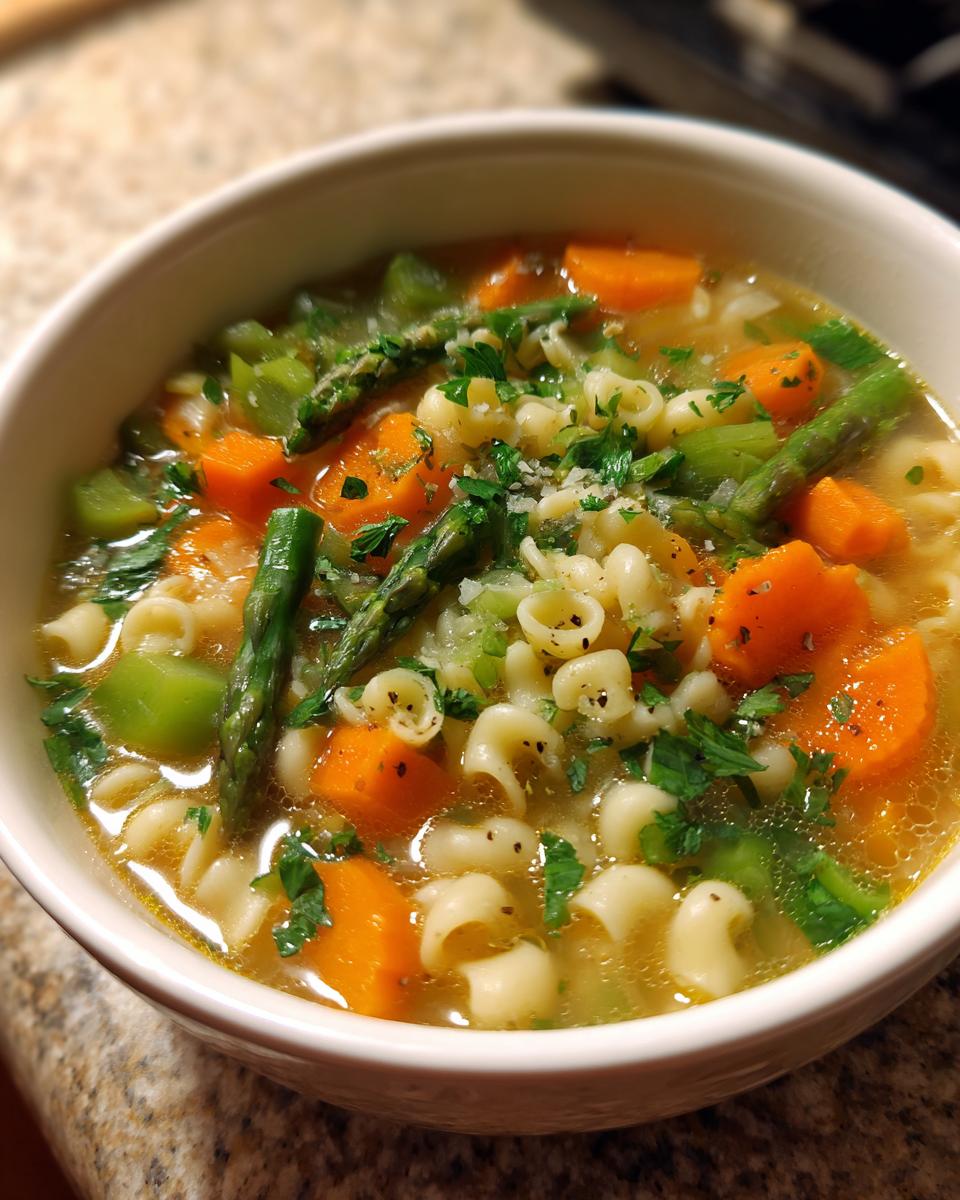
Spring Vegetable Minestrone
Make this light, one-pot spring minestrone featuring fresh May produce like leeks, asparagus, and peas in a clear, nutrient-dense broth for a clean eating mid-week meal.
- Prep Time: 15 min
- Cook Time: 25 min
- Total Time: 40 min
- Yield: 6 servings 1x
- Category: Dinner
- Method: Stovetop
- Cuisine: American
- Diet: Vegan
Ingredients
- 1 tablespoon olive oil
- 1 large leek, white and light green parts only, thinly sliced and washed well
- 2 carrots, diced
- 2 celery stalks, diced
- 2 cloves garlic, minced
- 6 cups vegetable broth
- 1 cup water
- 1 teaspoon dried thyme
- 1/2 teaspoon dried rosemary
- 1/2 cup small pasta, such as ditalini or small shells
- 1 cup chopped asparagus spears
- 1 cup fresh or frozen peas
- 1 (14.5 ounce) can diced tomatoes, undrained
- 1/4 cup fresh parsley, chopped
- Salt and black pepper to taste
Instructions
- Heat the olive oil in a large pot or Dutch oven over medium heat.
- Add the sliced leek, diced carrots, and diced celery to the pot. Cook, stirring occasionally, until the vegetables soften, about 6 to 8 minutes.
- Add the minced garlic and cook for 1 minute more until fragrant.
- Pour in the vegetable broth and water. Add the dried thyme and rosemary. Bring the mixture to a boil.
- Once boiling, add the small pasta and the diced tomatoes. Reduce the heat to maintain a simmer and cook according to the pasta package directions, usually about 8 to 10 minutes, until the pasta is nearly tender.
- Stir in the chopped asparagus and the peas. Continue to simmer for 3 to 5 minutes, until the asparagus is tender-crisp and the peas are heated through. Do not overcook the spring vegetables.
- Remove the pot from the heat. Stir in the fresh parsley.
- Taste the soup and season with salt and black pepper as needed before serving your light dinner recipe.
Notes
- Wash the leeks thoroughly under running water to remove all grit trapped between the layers.
- For a richer broth flavor, use homemade vegetable broth.
- This vegan soup freezes well, though the pasta may soften upon reheating.
Nutrition
- Serving Size: 1.5 cups
- Calories: 185
- Sugar: 6
- Sodium: 450
- Fat: 4
- Saturated Fat: 1
- Unsaturated Fat: 3
- Trans Fat: 0
- Carbohydrates: 30
- Fiber: 7
- Protein: 7
- Cholesterol: 0