Soft Sourdough Sandwich Bread for Family Sandwiches
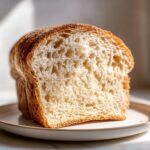
Bake a pillowy sourdough sandwich loaf using natural yeast bread methods. This recipe yields soft crust bread perfect for daily family meals.
- Prep Time: 30 min
- Cook Time: 45 min
- Total Time: 5 hours 45 min
- Yield: 1 loaf 1x
- Category: Baking
- Method: No-Knead Baking
- Cuisine: American
- Diet: Vegetarian
Ingredients
Scale
- 100g active sourdough starter
- 375g warm water (about 85°F)
- 500g bread flour
- 10g fine sea salt
Instructions
- Mix the active sourdough starter and warm water in a large bowl until combined.
- Add the bread flour and salt to the wet ingredients. Mix by hand until a shaggy dough forms and no dry flour remains.
- Cover the bowl and let the dough rest for 30 minutes (autolyse).
- Perform four sets of stretch and folds, spaced 30 minutes apart. Gently stretch a portion of the dough up and fold it over itself, rotating the bowl after each fold.
- After the final set of folds, let the dough rest, covered, for 1 hour at room temperature.
- Shape the dough into a tight log and place it seam-side up in a lightly floured 9×5 inch loaf pan.
- Cover the pan loosely and allow the dough to proof at room temperature for 2 to 4 hours, or until it has increased in volume by about 50% and passes the poke test (a gentle poke leaves an indentation that slowly springs back).
- Preheat your oven to 450°F (232°C) with a baking stone or steel inside, if using.
- Place the loaf pan into the preheated oven. Immediately reduce the oven temperature to 425°F (220°C).
- Bake for 20 minutes. Then, reduce the temperature to 375°F (190°C) and continue baking for another 20 to 25 minutes, until the crust is golden brown and the internal temperature reaches 205°F (96°C).
- Remove the bread from the pan immediately and cool completely on a wire rack before slicing for your family sandwiches.
Notes
- For an extra soft crust, brush the top of the loaf lightly with melted butter immediately after removing it from the oven.
- Use high-quality bread flour to achieve the best structure for this artisan sandwich bread.
- If your kitchen is cool, place the dough in a slightly warmer spot during bulk fermentation to maintain activity.
Nutrition
- Serving Size: 1 slice
- Calories: 250
- Sugar: 1
- Sodium: 300
- Fat: 1
- Saturated Fat: 0
- Unsaturated Fat: 1
- Trans Fat: 0
- Carbohydrates: 52
- Fiber: 3
- Protein: 10
- Cholesterol: 0
Find it online: https://hearthbite.com/soft-sourdough-sandwich-bread-recipe/