

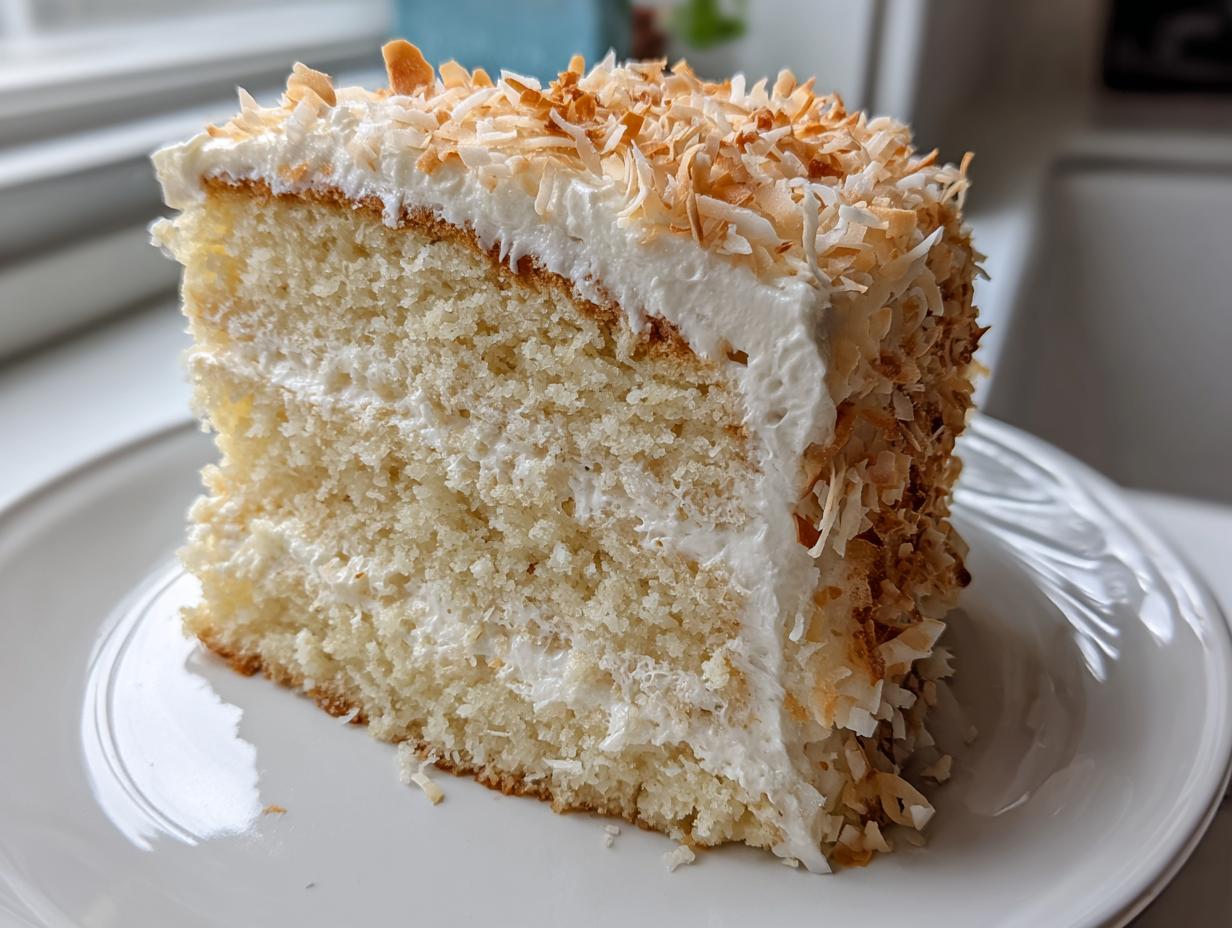
There’s just something about a true Southern baking tradition, isn’t there? That incredible promise of high layers, rich frosting, and a dessert that feels like a celebration even if it’s just a Tuesday. Here at HearthBite, my goal is always to bring you those reliable, deeply comforting recipes that taste like they came straight from a treasured family collection. That’s exactly what we’re doing today with what I genuinely believe is the Best Southern Coconut Cream Layer Cake you will ever bake. This coconut cake is pure magic—fluffy, incredibly moist, and designed to impress. It’s the kind of recipe Sarah Miller learned to trust when connecting back to her own kitchen roots, and I can’t wait for you to try it! If you want to read more about how we approach classic American comfort food here at the blog, you can always check out our story here.
- Why This Southern Coconut Cake Recipe is a Showstopper (Primary Keyword)
- Gathering Ingredients for Your Coconut Cake
- Step-by-Step Instructions for the Best Coconut Cake Recipe
- Expert Tips for a Perfect Coconut Cake (Primary Keyword)
- Serving Suggestions for This Tropical Cake Recipe
- Storing Your Homemade Coconut Dessert
- Frequently Asked Questions About Making a Coconut Cake
- Nutritional Estimate for This Classic Coconut Layer Cake
- Share Your Dreamy Coconut Dessert Experience
Why This Southern Coconut Cake Recipe is a Showstopper (Primary Keyword)
What sets this particular coconut cake apart from the hundreds you’ve probably seen online? It comes down to texture and flavor depth. This isn’t just a good cake; it’s constructed to be a showstopper so it truly earns the title of the best coconut cake recipe. We aren’t messing around with dry, crumbly layers here. This moist coconut cake recipe guarantees you get that light, glorious crumb that melts in your mouth, making it a truly fluffy coconut layer cake.
Achieving Tender Coconut Cake Layers
The secret to those perfectly tender coconut cake layers is all in the preparation—you can’t rush Mother Nature! Using room-temperature dairy and eggs ensures they emulsify beautifully with the softened butter. Plus, that little bit of buttermilk does heavy lifting for the crumb structure, giving it a slight lift and tenderness that standard milk just can’t replicate.
The Dreamy Coconut Frosting Recipe
When you bite into a proper coconut cream cake, the frosting has to hold its own. Our coconut cream cheese frosting recipe perfectly bridges the gap between rich decadence and tropical lightness. It’s tangy from the cream cheese, sweet enough without being cloying, and it holds its shape perfectly when slathered and coated. For the full scoop on mastering that frosting base, you can check out my general tips for the best cream cheese frosting recipe.
Gathering Ingredients for Your Coconut Cake
Okay, we’ve talked about *why* this recipe works magic—now let’s talk about having the players ready to go on the counter! Remember, the more precise you are with ingredient prep here, the less chaotic the actual mixing process will be. For this divine coconut cake, we need to separate our ingredients clearly into what’s going into the layers and what’s making that dream coating. Trust me, having everything pre-measured and at the right temperature is the real secret to that flawless, bakery-style finish.
Ingredients for the Moist Coconut Cake Layers
For the actual cake structure and flavor, you’ll need supplies that are ready to work together. Make sure your butter is softened—not melted goo!—and your eggs and buttermilk are sitting out for at least an hour to come to room temperature. This helps achieve that beautiful, uniform mix we are aiming for.
- 1 3/4 cups all-purpose flour
- 1 3/4 cups granulated sugar
- 1 tablespoon baking powder
- 1/2 teaspoon salt
- 1 cup unsalted butter, softened
- 4 large eggs, room temperature
- 1 cup buttermilk, room temperature
- 1 teaspoon vanilla extract
- 1/2 cup coconut milk (full fat – don’t skimp here!)
- 1 cup sweetened flaked coconut, toasted (don’t forget to toast this first!)
Ingredients for the Coconut Cream Cheese Frosting
This is where the rich, creamy texture comes together to coat all those beautiful, moist layers. Remember, you want your cream cheese and butter fully softened, but your powdered sugar absolutely must be sifted so you don’t end up with little lumps of sweetness in your frosting.
- 8 ounces cream cheese, softened
- 1/2 cup unsalted butter, softened
- 4 cups powdered sugar, sifted
- 1 teaspoon coconut extract
- 1/4 cup heavy cream
- 1 1/2 cups sweetened flaked coconut, for coating (this is the external snow!)
Step-by-Step Instructions for the Best Coconut Cake Recipe
Alright, we have our ingredients ready, and now it’s time to bring this incredible coconut cake to life! Don’t be intimidated by having three layers—we are going to break this down so simply it feels like you’ve been making this easy coconut cake from scratch forever. Just keep the mixer moving steadily, and trust the process, especially when it comes to getting those layers perfectly tender.
Preparing the Fluffy Coconut Layer Cake Batter
First things first, make sure your oven is humming along at 350 degrees F, and those three 8-inch pans are greased, floured, and have parchment bottoms—that’s your fail-safe! In a big bowl, give your dry stuff (flour, sugar, leavening) a good whisk. Now, we introduce the softened butter. Mix it on low until it looks like coarse, wet sand; that initial texture is key for air pockets. Next, gently mix all your wet ingredients together separately. Slowly add the wet mixture to the dry stuff in three passes, mixing just until you see no more flour streaks. For the very last step with the batter, gently fold in that cup of toasted coconut so you don’t knock out all the air we just worked so hard to whip in! I often use a spatula for this part to be extra careful.
Baking and Cooling the Coconut Cake
Divide that gorgeous batter evenly between your prepared pans—try to be as precise as you can so they bake evenly. Pop them into the oven for about 28 to 32 minutes. You’ll want to test by inserting a wooden pick right near the center; if it comes out clean, they are done! Here’s a vital tip if you want that fluffy coconut layer cake structure: let the cakes rest right in their pans on a wire rack for a full 10 minutes before you try flipping them out. If you rush this, they might collapse on you!
Making and Assembling the Coconut Cake
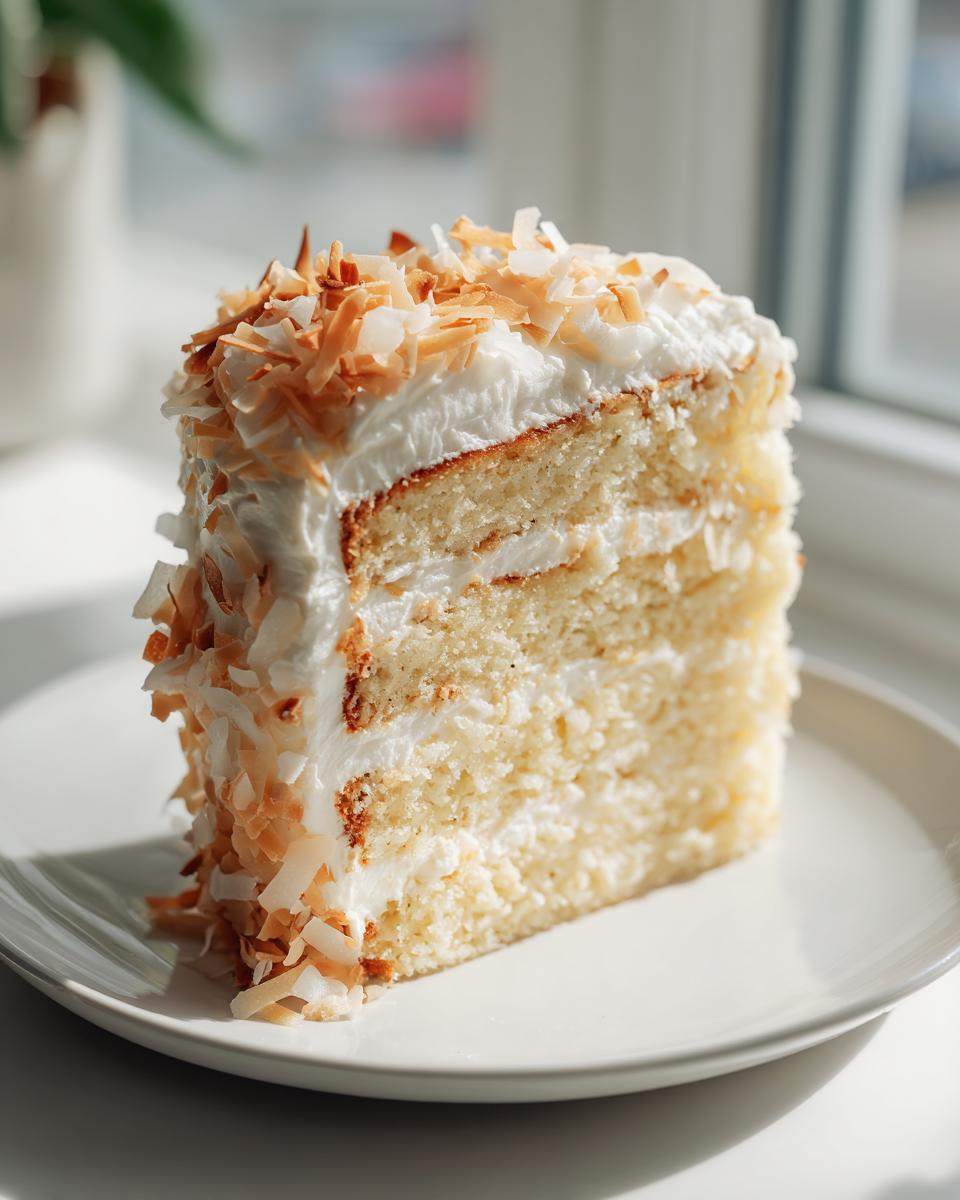
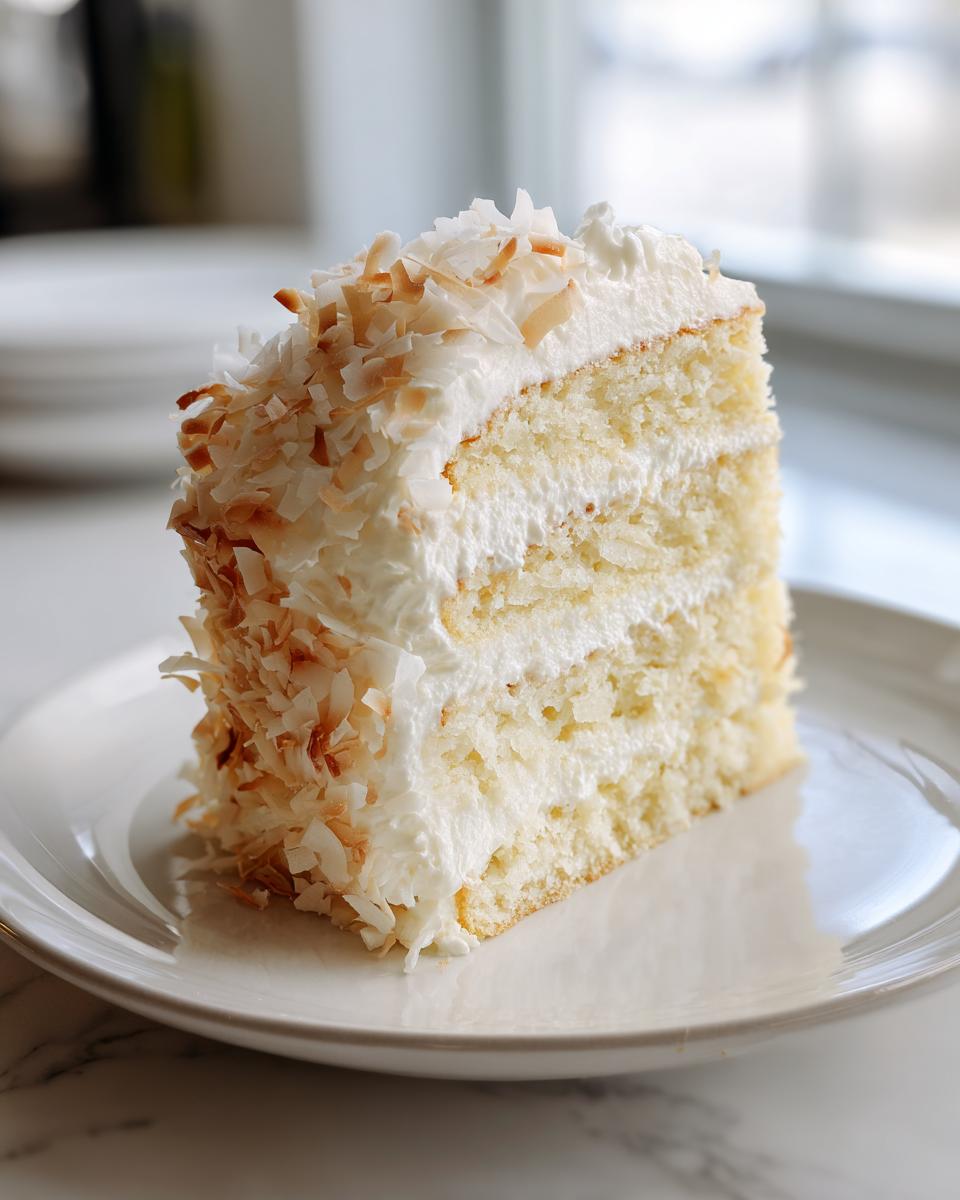
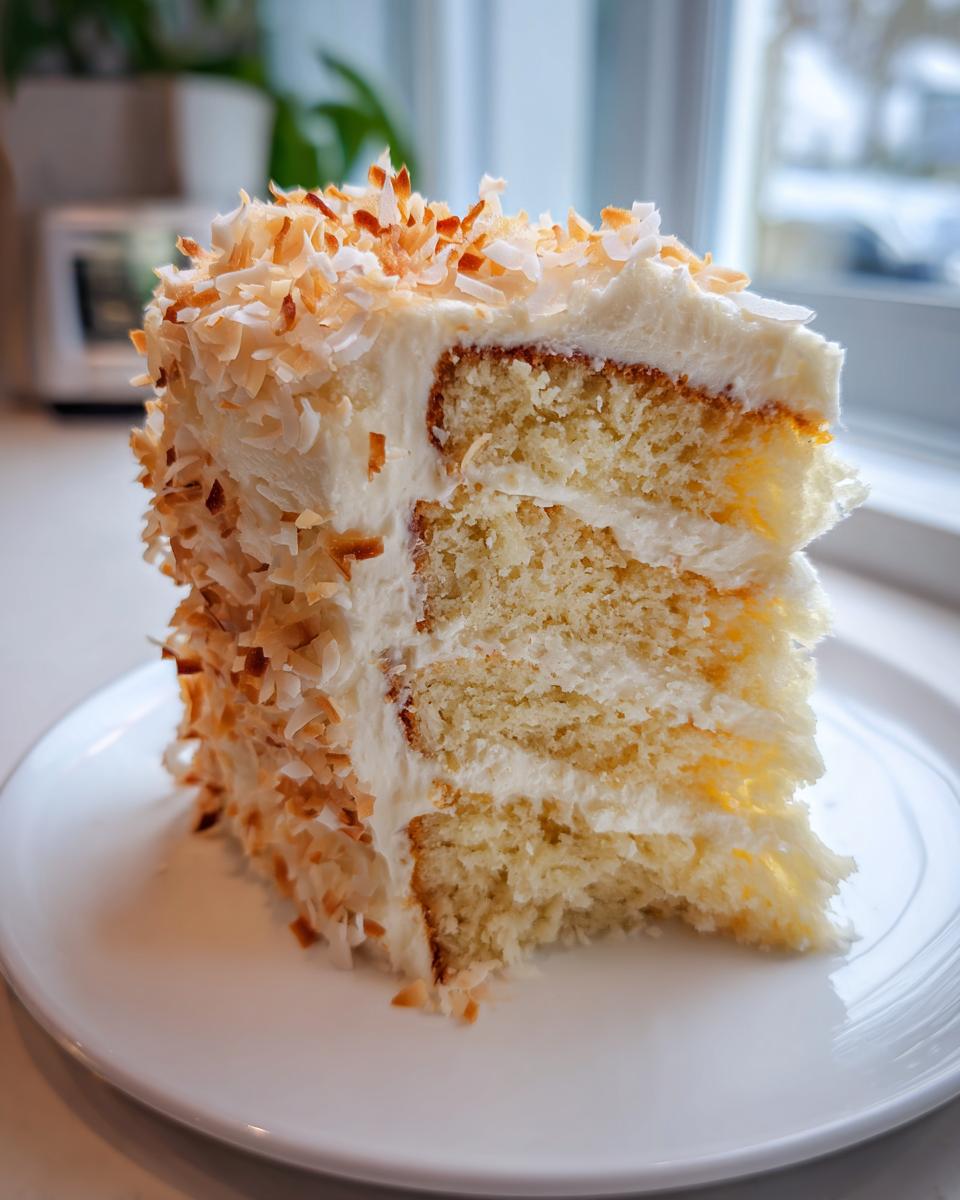
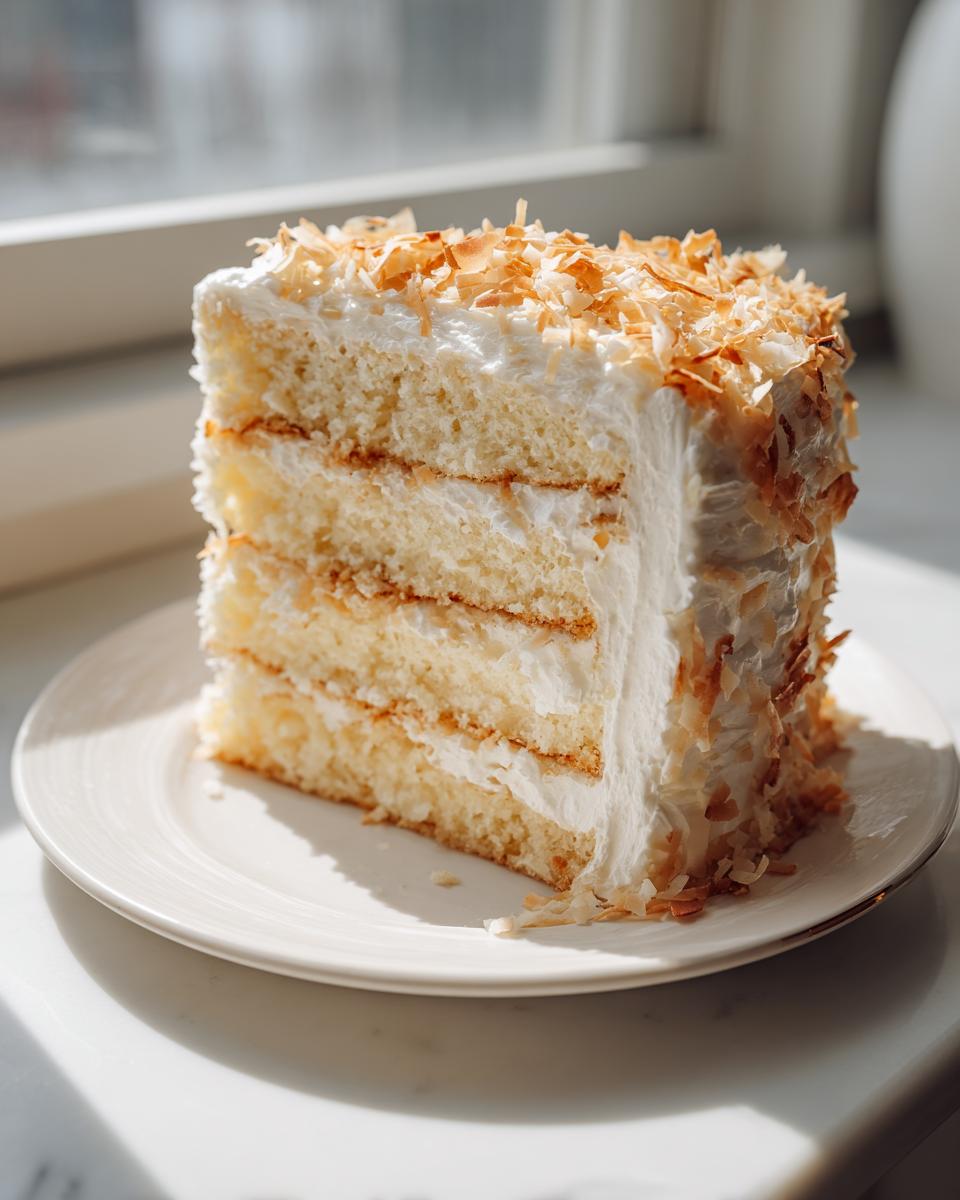
While those layers are cooling down completely—and I mean *completely* cool, or your frosting will turn into soup—get started on that dreamy coconut frosting recipe. Beat the cream cheese and butter until they are smooth. Then, slowly add the sifted powdered sugar, followed by the coconut extract and heavy cream, whipping until it’s light and spreadable. Once those layers are cold to the touch, stack them up alternating with generous layers of frosting, just like you see in a bakery style coconut cake. Finally, slather the top and sides of the entire creation with the remaining frosting, and here’s the fun part: press that last 1 1/2 cups of shredded coconut all over the surface for that beautiful, snowy finish!
If you’re looking for tips on other homemade treats that require patience and precision, like my sea salt caramels, you know where to find them!
Expert Tips for a Perfect Coconut Cake (Primary Keyword)
Baking this heavenly coconut cake requires more than just following a list; it takes a little know-how to get that bakery-style perfection right at home. These little insider secrets are what take your cake from good to absolutely unforgettable. We want that light, airy texture and flavor that really pops, so pay close attention to how we handle the coconut itself and, most importantly, the temperature of those chilled ingredients!
Toasting Coconut for Maximum Flavor
Listen, you absolutely cannot skip toasting the shredded coconut until the very last minute. Pre-toasted coconut just doesn’t have the same deep, nutty aroma that defines a stellar Southern coconut cake. The recipe calls for spreading about 1 cup for the batter and 1 1/2 cups for the outside coating. Here’s the trick: spread them evenly on a baking sheet and pop them into your 350-degree oven. They toast FAST! I mean seriously fast—we’re talking 5 to 8 minutes max. You have to watch them like a hawk because going from golden brown to burnt charcoal takes about five seconds. Pull them out the second they look nicely golden; the residual heat will keep them cooking just a tiny bit more.
Ingredient Temperature Checks
If you take away only one thing from my experience baking this, let it be this: the temperature of your liquids and fats matters hugely! If your butter is too cold, it won’t cream properly with the sugar, meaning fewer air pockets, and you end up with a dense cake instead of that light and airy cake we are aiming for. Similarly, cold eggs and cold buttermilk shock the butter mixture when they go in, causing it to curdle or separate.
Make sure your eggs and buttermilk have had at least an hour on the counter. When they are at room temperature, they blend seamlessly into that creamy butter base, creating a smooth, emulsified batter that ensures those tender coconut cake layers stay moist and happy throughout the bake. If you’re curious about other recipes where precise ingredient temp management is key, check out my guide to baking a foolproof moist lemon loaf copycat.
Serving Suggestions for This Tropical Cake Recipe
Because this coconut cake is so rich, sweet, and gloriously tropical, it doesn’t really need much help to shine at your next gathering. However, if you are looking to create a truly beautiful spread for your coconut dessert for celebrations, think about balancing that tropical sweetness with something bright or tart. A small bowl of macerated raspberries or vibrant sliced mango on the side cuts through the richness of that cream cheese frosting beautifully.
If you’re serving this as part of a bigger dessert table, it pairs wonderfully with coffee—nothing too sweet, so the coconut flavor comes through. For other recipes that feature bright, seasonal flavors, take a peek at my cranberry orange bread recipe; those citrus notes are a gorgeous contrast to this buttery tropical cake recipe.
Storing Your Homemade Coconut Dessert
You just finished making the most amazing, snowy-topped coconut cake, so naturally, you want it to last! Since we used that glorious cream cheese frosting, keeping it fresh requires a little forethought. If you’re not planning on serving the entire thing right away, you need to get it into the fridge fairly quickly, especially if your kitchen is warm.
Store your finished homemade coconut dessert in an airtight container in the refrigerator. This is non-negotiable with cream cheese frosting; otherwise, it’ll weep or spoil faster than you can say ‘fluffy layer cake.’ I usually find it stays perfectly delicious and moist for a good three to four days stored this way. Don’t worry that the cake layers will dry out—the ample frosting does a fantastic job of sealing in all that moisture!
Now, here’s a small tip that makes slicing so much nicer: remember the note about chilling? Before you slice into your beautiful creation, pop the whole frosted cake into the refrigerator for about 30 minutes. This slightly firming time allows the frosting to set up firmly. When you use a sharp, thin knife to cut the slices, it won’t drag through the soft layers, resulting in those clean, beautiful cuts that make it look exactly like a professional bakery style coconut cake.
If you happen to have leftovers that are very firm from the fridge, you can let a slice sit out on the counter for about 20 minutes before eating it. That little bit of warmth allows the butter in the frosting to soften just enough to bring back that perfectly creamy texture!
Frequently Asked Questions About Making a Coconut Cake
Whenever I share recipes this special, like this incredible coconut cake, I always get the same handful of questions pop up. Totally understandable! Taking on a layered beauty needs a little reassurance. Don’t you worry, I’ve gathered the most common worries about moisture, texture, and presentation right here so you can bake with total confidence!
Can I use regular milk instead of buttermilk in this moist coconut cake recipe?
Oh, that’s a common one! While you certainly *can* use regular milk in a pinch for this moist coconut cake recipe, you’ll be losing some of the magic that makes the layers stay so tender. Buttermilk has acid, and that acid reacts beautifully with the baking powder and the fats in the cake, helping create that desirable lift and lightness. If you’re out, don’t panic! You can always make a substitute. Just measure out one cup of regular milk, take a tablespoon of white vinegar or lemon juice out of that cup, stir it up, and let it sit for about five minutes until it looks slightly curdled. That’s your homemade buttermilk, and it works almost exactly the same way!
How do I ensure my coconut cake is bakery style and not dry?
For that beautiful bakery style coconut cake finish—moist, fluffy, and never crumbly—you need to listen to the batter! Honestly, the number one enemy of a moist cake is overmixing once the flour hits the liquids. As soon as you see those last few streaks of flour disappear, stop the mixer! You want to mix just until combined. Secondly, remember we stressed using both buttermilk AND full-fat coconut milk? Those liquids are non-negotiable for locking in moisture. A dry cake is almost always an over-mixed cake or one that didn’t have enough moisture added in the first place.
What is the best way to make this coconut cake for birthdays?
This gorgeous dessert is absolutely a coconut cake for birthdays! It looks stunning when you use the full three layers, serving as a true centerpiece. For presentation that screams celebration, make sure you follow the final step exactly: press that last bit of flaked coconut right up the sides of the cake. This creates that wonderful, thick, snowy coating that looks so professional and luxurious.
If you’re looking at other celebrations and need recipes that are tried-and-true, I always share my updates over on my Privacy Policy page, but certainly feel free to save this one for your next big event!
Nutritional Estimate for This Classic Coconut Layer Cake
Now, I always want to be crystal clear about this part: the nutrition facts for something as outrageously delicious as this classic coconut layer cake are just an estimate! When you are working with real butter, cream cheese, and sugar, it’s going to be a true indulgence, and that’s okay! This is a celebration cake, not something we eat every day, right?
That said, I ran the numbers based on the ingredients list to give you a general idea of what’s in one generous slice (based on a 12-serving yield). If you’re worried about sugar content, remember that the sheer size of the slice dictates a lot of that number! Like all my recipes, I try to be transparent about what goes into our bakes. For other treats that balance flavor and lighter components, you might want to check out how I make my easy creamy pumpkin soup—a good savory break!
Here is the breakdown for one slice of this divine coconut cake:
- Serving Size: 1 slice
- Calories: About 480
- Fat: 26g (with 15g Saturated Fat)
- Carbohydrates: 60g
- Sugar: 55g (Wow, yes, but it’s worth it!)
- Protein: 5g
- Cholesterol: 95mg
Keep in mind that differences in brands of butter, the exact amount of frosting you use on your personal cake, and how precisely you cut the slices will move these numbers around. The main takeaway here? This is a rich, wonderful dessert meant to be savored!
Share Your Dreamy Coconut Dessert Experience
We’ve come to the end of the road for making this glorious coconut cake, but truly, the story isn’t finished until you’ve tried it! My heart is happiest when I know these detailed steps have brought a beautiful, rich, and incredibly moist dessert to your own kitchen table, whether it’s for a big event or just a Sunday treat.
I really hope you give this recipe a try. Once you’ve baked it, please come right back here and let me know how it went! Have you ever made a fluffy coconut layer cake before? Dropping a rating below helps other home cooks like you feel brave enough to tackle this showstopper.
I absolutely love seeing your results! If you decorated it differently, maybe you made it a single layer, or perhaps you tried adding a little lime zest to the batter—tell me all about it in the comments. If you’re more of a photo sharer, feel free to tag us on social media; I pore over every single tag!
If you have any burning questions that I didn’t cover in the FAQ, please shoot me a message over on the contact page. And if you’ve finished baking and already need inspiration for your next amazing bake, maybe check out this fantastic soft and fluffy coconut cake recipe for comparison!
PrintSouthern Coconut Cream Layer Cake: Moist and Fluffy
Bake a show-stopping Southern Coconut Cream Layer Cake with tender, moist layers and rich coconut cream cheese frosting. This bakery-style dessert is perfect for celebrations.
- Prep Time: 30 min
- Cook Time: 35 min
- Total Time: 65 min
- Yield: 12 servings 1x
- Category: Dessert
- Method: Baking
- Cuisine: American
- Diet: Vegetarian
Ingredients
- 1 3/4 cups all-purpose flour
- 1 3/4 cups granulated sugar
- 1 tablespoon baking powder
- 1/2 teaspoon salt
- 1 cup unsalted butter, softened
- 4 large eggs, room temperature
- 1 cup buttermilk, room temperature
- 1 teaspoon vanilla extract
- 1/2 cup coconut milk (full fat)
- 1 cup sweetened flaked coconut, toasted
- For the Frosting: 8 ounces cream cheese, softened
- 1/2 cup unsalted butter, softened
- 4 cups powdered sugar, sifted
- 1 teaspoon coconut extract
- 1/4 cup heavy cream
- 1 1/2 cups sweetened flaked coconut, for coating
Instructions
- Preheat your oven to 350 degrees F. Grease and flour three 8-inch round cake pans. Line the bottoms with parchment paper.
- In a large bowl, whisk together the flour, sugar, baking powder, and salt.
- Add the softened butter to the dry ingredients. Beat with an electric mixer on low speed until the mixture resembles coarse sand.
- In a separate bowl, whisk together the eggs, buttermilk, vanilla extract, and coconut milk.
- With the mixer on low, gradually add the wet ingredients to the dry ingredients in three additions, mixing until just combined after each addition. Scrape down the sides of the bowl.
- Beat the batter on medium speed for two minutes. Gently fold in the 1 cup of toasted flaked coconut.
- Divide the batter evenly among the prepared cake pans.
- Bake for 28 to 32 minutes, or until a wooden pick inserted into the center comes out clean. Let the cakes cool in the pans for 10 minutes before inverting them onto a wire rack to cool completely.
- Prepare the coconut cream cheese frosting: Beat the softened cream cheese and butter together until smooth and creamy.
- Gradually add the sifted powdered sugar, mixing on low speed until incorporated, then increase speed to medium and beat until fluffy.
- Add the coconut extract and heavy cream. Beat until the frosting is light and spreadable.
- Once the cake layers are completely cool, place the first layer on a serving plate. Spread with a layer of frosting. Repeat with the second layer.
- Place the final layer on top and frost the top and sides of the entire cake.
- Press the remaining 1 1/2 cups of flaked coconut onto the top and sides of the cake for a snowy finish.
Notes
- To toast the flaked coconut, spread it on a baking sheet and bake at 350 degrees F for 5 to 8 minutes, watching constantly to prevent burning.
- For extra coconut flavor in the layers, substitute 1/4 cup of the buttermilk with additional coconut milk.
- Chill the frosted cake for 30 minutes before slicing to help the layers set firmly.
Nutrition
- Serving Size: 1 slice
- Calories: 480
- Sugar: 55
- Sodium: 280
- Fat: 26
- Saturated Fat: 15
- Unsaturated Fat: 11
- Trans Fat: 0.5
- Carbohydrates: 60
- Fiber: 1
- Protein: 5
- Cholesterol: 95