

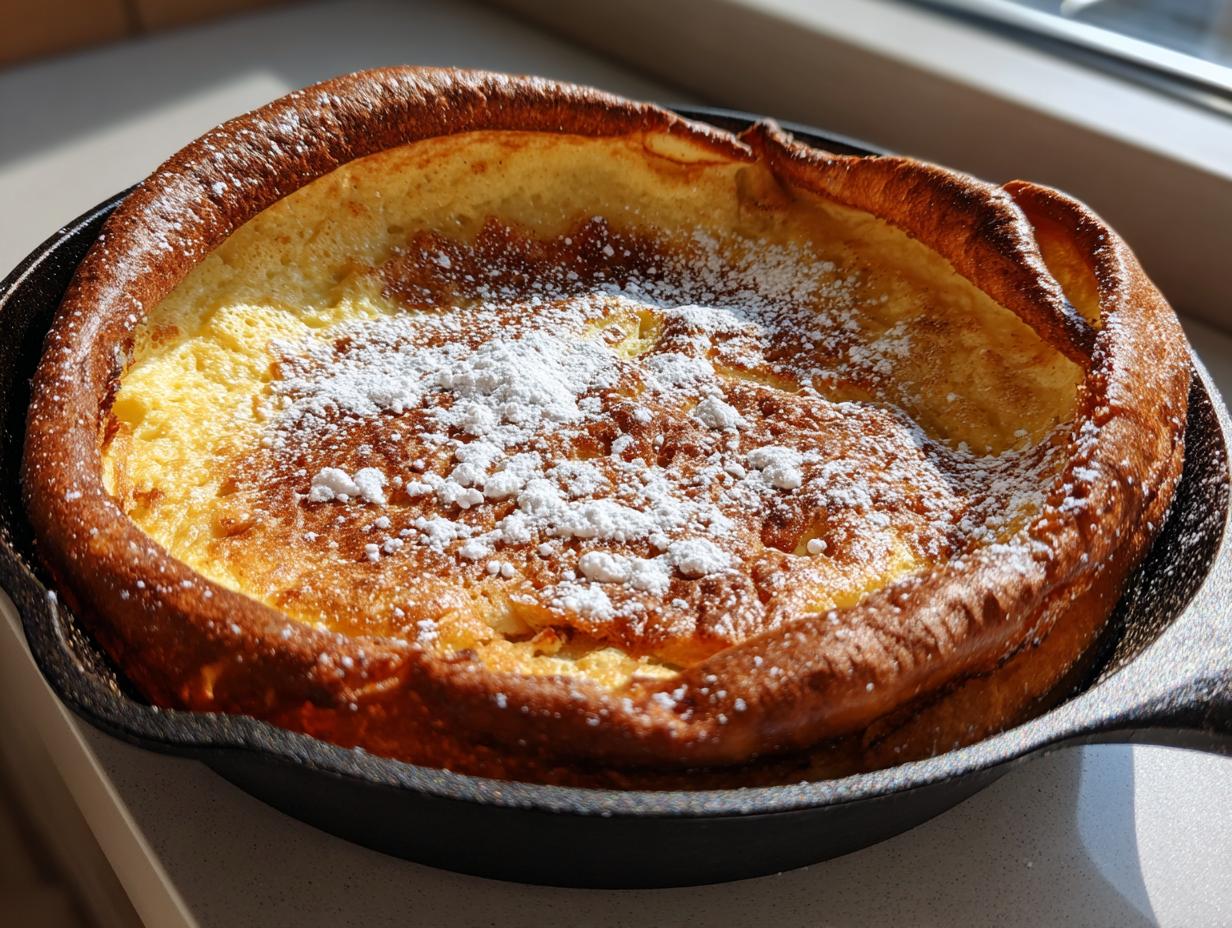
There is just something so satisfying about waking up and knowing you can whip up a breakfast that looks like it came from a fancy European cafe, but only took minutes of actual work. That’s the magic of oven-baked goodness, and trust me, our easy breakfast recipes always bring the drama! We’re talking about the spectacular, towering edges of our Easy Dutch Baby German Pancake Recipe. These aren’t your average short stacks; these are giant, fluffy creations that puff up like a cloud right before your eyes. Back at HearthBite, Sarah Miller always says that simple, comforting food like these german pancakes is exactly what our kitchens need. It’s heritage you can eat, proving that the best family traditions are the ones that make mornings special without the fuss.
- Why This German Pancake Recipe is a Family Favorite
- Gathering Ingredients for Authentic German Pancakes
- How to Make German Pancakes: Step-by-Step Instructions
- Tips for Success with Your German Pancake
- Serving Suggestions: Sweet German Pancakes Toppings
- Savory German Pancake Ideas
- Storage & Reheating Instructions for Leftover German Pancakes
- Frequently Asked Questions About Making German Pancakes
- Share Your Family Favorite Oven Pancake Experience
Why This German Pancake Recipe is a Family Favorite
Honestly, this is the German pancake recipe that made me ditch the regular frying pan forever. It’s all about the payoff for almost zero effort, which is exactly what we need when we’re rushing to get dinner or tackle the school run after breakfast.
- It uses just a handful of pantry staples—eggs, milk, flour, salt, and butter. That’s it!
- It’s ridiculously fast. Seriously, you mix it up while the oven is heating.
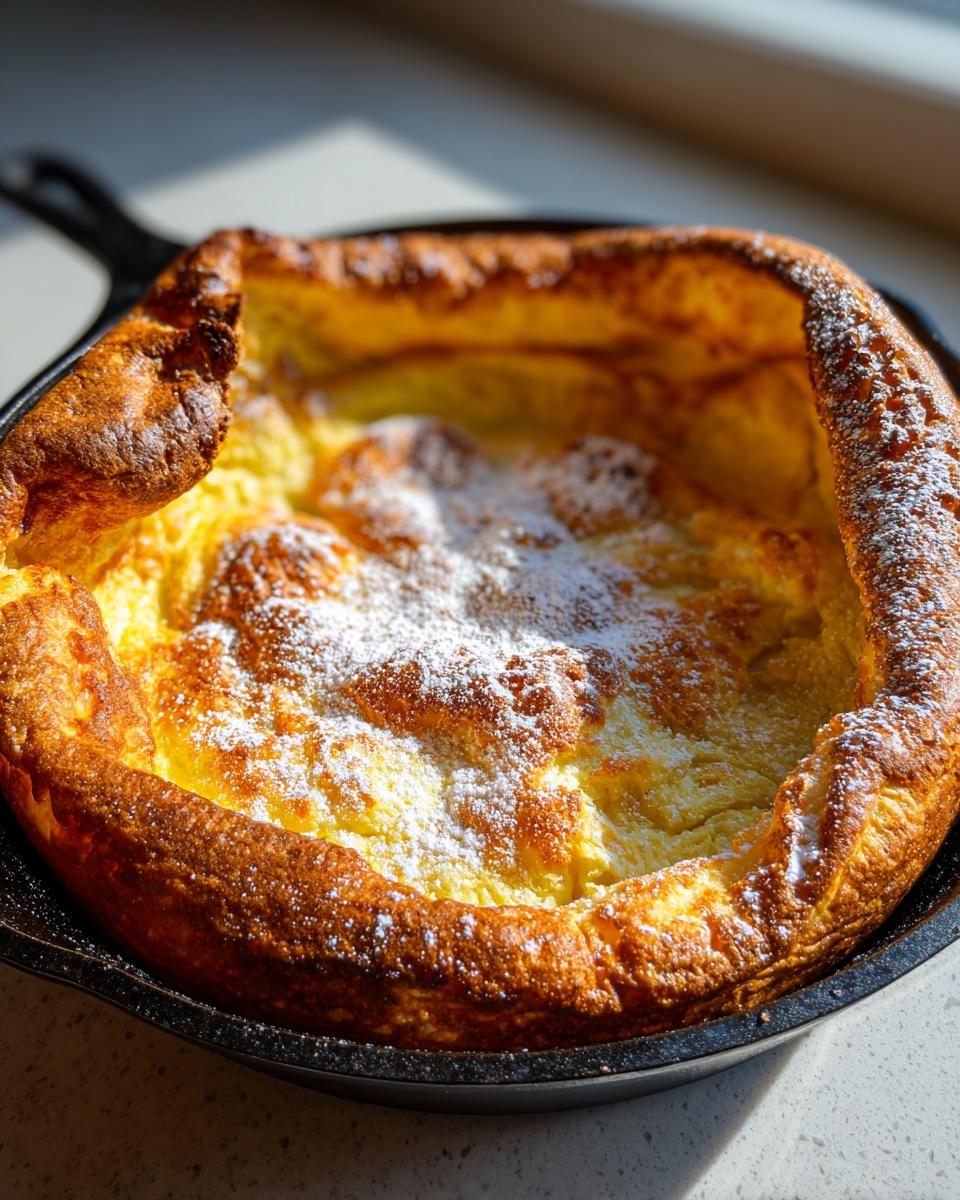
- The visual awe factor is 10/10 when it emerges from the oven looking like a giant, golden cloud.
Quick Prep for Easy Breakfast Baking
When Sarah started HearthBite, she promised reliable recipes for the modern home, and this one delivers big time. We clock the prep at just five minutes! That means you can whip this batter up right before the kids even finish setting the table. It’s the best kind of simple baking because it feels gourmet but requires almost no thinking.
The Giant Fluffy Pancake Tutorial
The reason everyone loves this is the puff. It’s theatrical! You’re not flipping tiny pancakes; you’re baking a single, massive, fluffy wonder. When the batter hits that sizzling butter in the screaming-hot cast iron skillet, the steam kicks it up high. It’s such a rewarding sight, and it shows you’ve mastered the oven baked pancakes technique perfectly.
Gathering Ingredients for Authentic German Pancakes
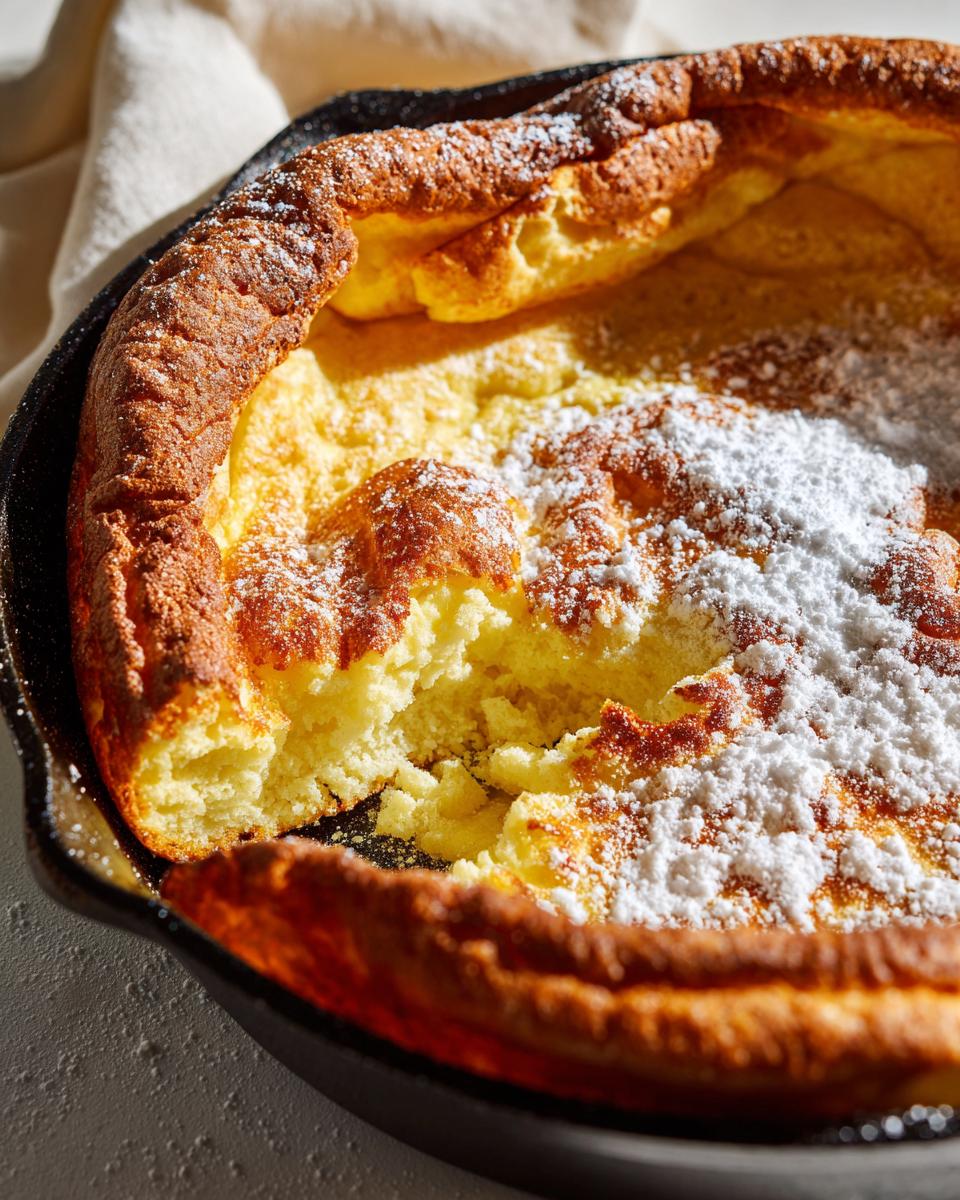
Okay, let’s talk components! Part of what makes this German Pancake Recipe so special is how few things you actually need. You are not digging through the back of the pantry for a million spices, thank goodness. We need eggs, flour, milk, salt, and butter. That’s the core for our beautiful cast iron skillet pancake.
You do need three large eggs—make sure they’re large, please! And for the fat, we use a quarter cup of unsalted butter. It melts right in that searing hot skillet to create that perfect crust.
Ingredient Notes and Substitutions
I always recommend using whole milk if you have it. The fat content really helps carry the flavor and helps that big pancake puff up gorgeously. If you only have 2% on hand, go ahead and use it—it’ll still work wonderfully! Just know that this lineup is naturally vegetarian, which is great for family breakfasts.
Now, if you’re gluten-free, you can absolutely swap in an all-purpose gluten-free blend, just make sure it contains xanthan gum if you want the texture to bounce back exactly right. But for this traditional version, stick to regular AP flour!
How to Make German Pancakes: Step-by-Step Instructions
Alright, this is where the magic happens! Getting these German pancakes right isn’t tough, but you have to respect the heat. It’s all about getting everything screaming hot before the batter even touches the pan. If you’re feeling inspired to try some other fast meals after breakfast, check out some of my ideas for quick, easy dinner recipes!
Preheating for the Perfect Puff Secrets
This is step one, and you can’t skip it! You need to set your oven to 425 degrees Fahrenheit. Not only does the oven need to be hot, but your baking vessel has to be scorching too. Place your 10-inch cast iron skillet right inside the oven while it heats up. We need that pan radiating heat when the batter goes in—that’s what forces that spectacular puff!
Mixing the German Pancake Batter
While that pan is getting nice and toasty, mix your batter. I always whisk the three eggs first until they’re light and actually look a bit frothy—that traps the air we need. Then, I whisk in the flour and salt slowly until combined. Here’s my big tip: Be gentle when adding the milk! You want it smooth, but if you overmix, you’ll develop the gluten and end up with something tough instead of that lovely, tender structure. It should just barely come together.
Baking Your Oven Baked Pancakes
When the oven and pan are totally ready (about 10 minutes of preheating for the pan), carefully pull that skillet out—watch the hot butter already sizzling in there! Pour your batter right on top of that melted, super-hot butter and hustle it back into the oven immediately. For the next 15 to 20 minutes, I mean it: **Do not open that oven door!** If you peek, the temperature will drop, and your glorious pancake will deflate right before your eyes. Patience is key here as it bakes golden brown and puffs up high around the edges.
Tips for Success with Your German Pancake
Even though this is an Easy Dutch Baby Pancake Recipe, I totally get that sometimes things go wrong! I remember my first attempt years ago; I was so excited to see it rise, I tried to check on it at 10 minutes. Whoops! It sank into a sad, flat puddle. Lesson learned: the oven door is your enemy until it’s done baking! If you want that beautiful, fluffy pancake baking tips result, you have to trust the process, much like I trust my favorite comfort food recipes to always hit the spot.
Troubleshooting Common Issues
If your beautiful creation deflates immediately after leaving the oven, don’t fret. It’s usually because you opened the door too early, allowing that hot steam to escape too fast. For the next batch, just wait until that 15-20 minute mark is totally up!
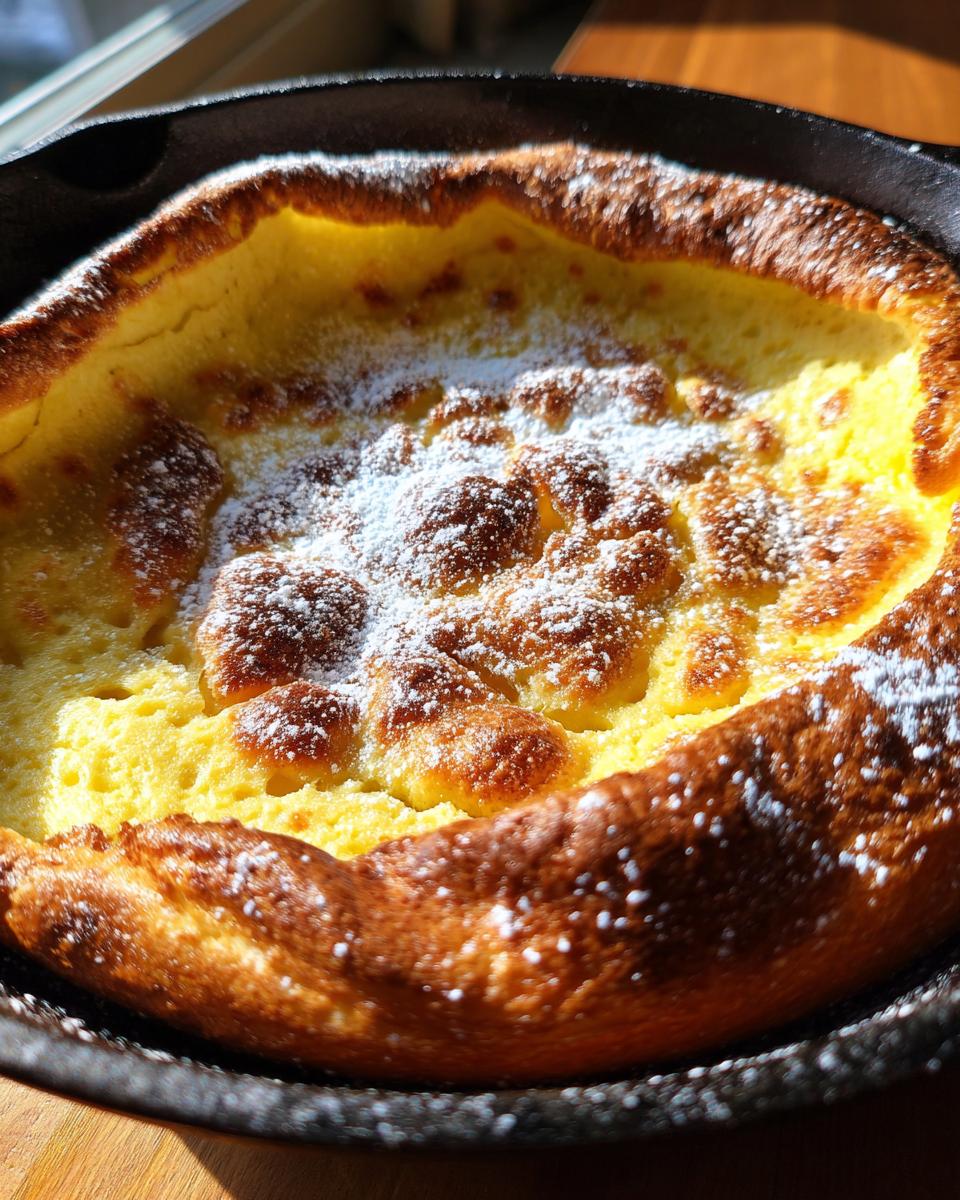
Also, keep an eye on your browning. If the edges are getting dark way faster than the center looks cooked, your skillet might need a slight adjustment. Try moving it to a lower rack next time. We want that gorgeous golden brown all over, not just burnt edges!
Serving Suggestions: Sweet German Pancakes Toppings
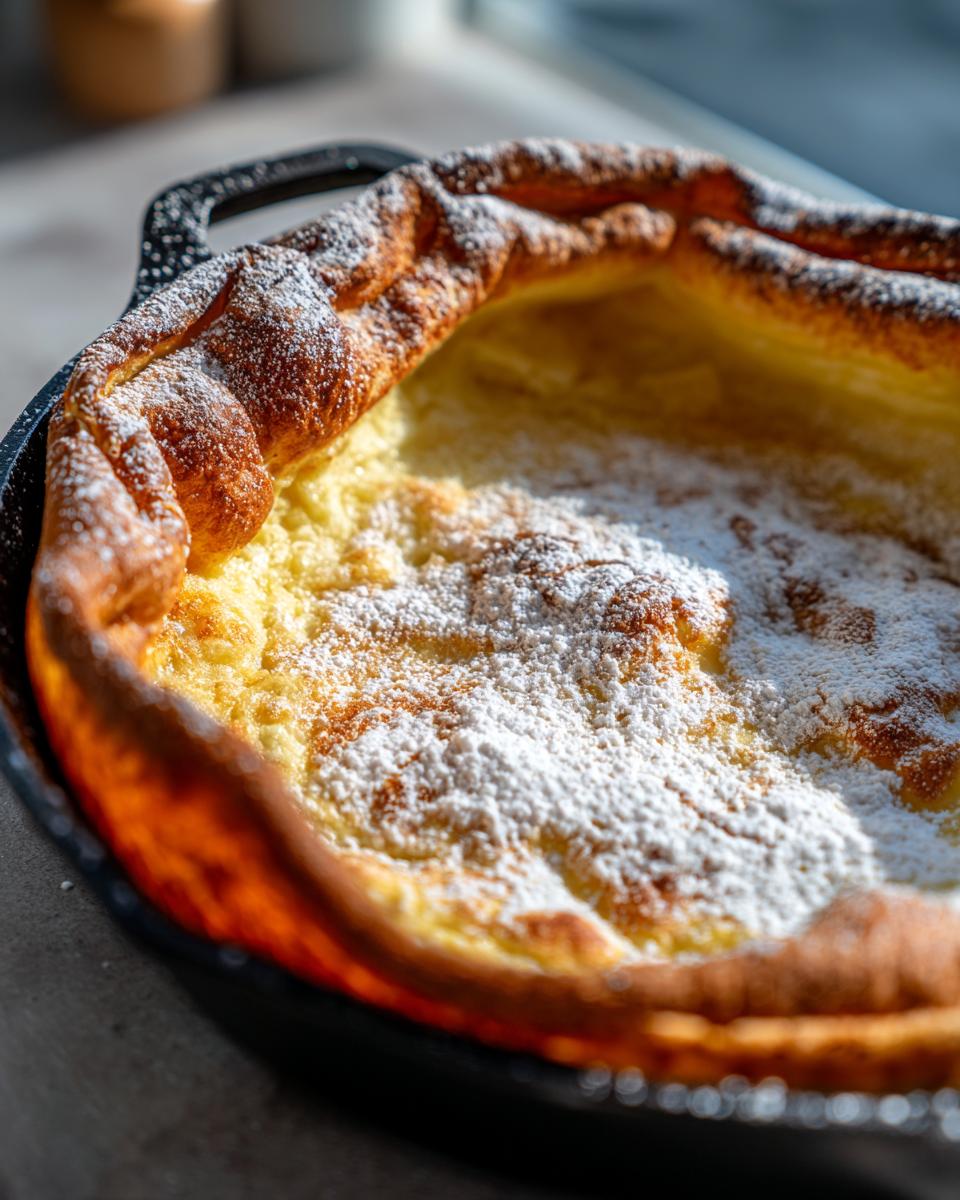
Okay, once your giant, golden beauty is out of that hot skillet, you have to move fast because it starts to settle almost immediately! Serving these sweet German pancakes is half the fun. The absolute classic presentation, the way my family always did it, is ridiculously simple but tastes like heaven.
You want a generous squeeze of fresh lemon juice—don’t skip the lemon! That bright little acidic punch cuts through the richness of the butter and eggs. Then, dust it heavily with powdered sugar. Seriously, don’t be shy with the sugar shaker! That’s the traditional Traditional German Breakfast Recipe setup.
But if you want to go further, I love spreading softened cream cheese over the warm folds, or maybe topping it with fresh berries and a drizzle of pure maple syrup. It’s such a flexible dish! For more sweet morning ideas, you can always check out my main list of easy breakfast recipes for inspiration!
Savory German Pancake Ideas
Now, I know most people think of sugar and lemon when they hear german pancakes, but you have to try them savory sometime! It totally transforms the dish from a sweet treat into a fantastic brunch centerpiece or even a light dinner. My sister, who is not much of a sweets person, absolutely loves this twist.
Think of it as a blank canvas for whatever you have in the fridge. I’ve done a version sprinkled with fresh chives and Gruyère cheese right before baking. Wow! Another great idea is topping it simply with sautéed mushrooms and a sprinkle of fresh thyme after it comes out of the oven. If you are feeling really fancy, thinly sliced smoked salmon and a dollop of crème fraîche are just divine!
Storage & Reheating Instructions for Leftover German Pancakes
Because the whole glory of this oven baked pancake is that initial, dramatic puff, I won’t lie—it’s best eaten the second it comes out of the oven! But leftovers happen, right? If you have pieces left over (usually the flatter middle part), just store them in an airtight container on the counter for up to two days.
When you want to bring some of that magic back, skip the microwave entirely! Microwaving just makes it rubbery. Instead, I pop the slices onto a baking sheet in a 350-degree oven for about five to seven minutes. It crisps the outside just enough to trick you into thinking it puffed up all over again!
Frequently Asked Questions About Making German Pancakes
We all have those little hang-ups or uncertainties when trying a new recipe, especially one that relies on dramatic rising! I’ve gathered the questions I get most often about getting these German pancakes perfect every single time. Don’t worry if you’re second-guessing your pan choice or wondering about an ingredient swap; we’ve got you covered.
Can I use a different pan instead of a cast iron skillet for these german pancakes?
That’s a great question. While the cast iron skillet is truly the champion here because it holds and radiates heat so beautifully—which is essential for that powerful puff—you can use other oven-safe skillets, like heavy stainless steel or even a sturdy ceramic or glass pie dish. If you swap to glass or ceramic, I would dial the oven temperature down just slightly, maybe to 400 degrees Fahrenheit instead of 425, and keep a closer eye on it since they don’t hold heat quite the same way.
What is the difference between a Dutch Baby and Authentic Pfannkuchen?
That’s a fun bit of culinary history! Most people today use German pancakes and Dutch Baby interchangeably, but technically, the Dutch Baby is the tall, puffy, oven-baked version popularized in America. An Authentic Pfannkuchen from Germany can sometimes be thinner, more like a crepe, or slightly smaller pancakes cooked on the stovetop. But when you hear people ask for this recipe, they almost always mean the giant, dramatic one we are making here!
Can I make the batter for these oven baked pancakes ahead of time?
I strongly advise against it, honestly. For this specific recipe, which relies on trapping air bubbles in the eggs and getting that batter into extreme heat instantly, freshness matters most. If you let the batter sit for too long—even an hour—the flour starts to absorb the liquid and the air you whisked into those eggs starts to deflate. It’s best kept to that 5-minute prep time right before you slide that skillet into the oven.
Share Your Family Favorite Oven Pancake Experience
I truly hope that making this giant, fluffy pancake brings as much joy to your table as it does to mine and Sarah’s family gatherings. When we talk about simple breakfast baking here at HearthBite, we’re really talking about creating connection.
Did yours puff up like a beautiful golden sail? Did you sneak a dusting of powdered sugar immediately while it was still steaming hot? I want to hear every detail! Don’t be shy—let the recipe developers and other home cooks know how your attempt at these german pancakes went in the comments below.
If you tried a totally wild savory topping or had a great success baking it in a different kind of pan, drop us a rating and share the story! Your feedback helps us keep our recipes reliable for everyone. And if you made any fantastic memories, or if you need to reach out about a recipe inspiration, feel free to get in touch via our contact page. Happy baking!
PrintEasy Dutch Baby German Pancake Recipe
Make a giant, fluffy oven baked pancake, often called a German pancake or Dutch Baby, using this simple recipe. It puffs high in the oven and is perfect for a family favorite breakfast.
- Prep Time: 5 min
- Cook Time: 20 min
- Total Time: 25 min
- Yield: 2 servings 1x
- Category: Breakfast
- Method: Baking
- Cuisine: German
- Diet: Vegetarian
Ingredients
- 3 large eggs
- 1/2 cup all-purpose flour
- 1/2 cup milk
- 1/4 teaspoon salt
- 1/4 cup unsalted butter
Instructions
- Preheat your oven to 425 degrees Fahrenheit. Place a 10-inch cast iron skillet in the oven while it preheats.
- In a medium bowl, whisk the eggs until they are light and frothy.
- Gradually whisk in the flour and salt until just combined. Do not overmix.
- Slowly whisk in the milk until you have a smooth batter.
- Carefully remove the hot skillet from the oven. Add the butter to the hot skillet and swirl it around until the butter is melted and coats the bottom and sides of the pan.
- Pour the batter directly into the hot, buttered skillet.
- Return the skillet to the oven and bake for 15 to 20 minutes. Do not open the oven door during baking.
- The German pancake is done when it is puffed high around the edges and golden brown.
- Remove from the oven and serve immediately.
Notes
- For a perfect puff, make sure your oven and skillet are fully preheated.
- Serve immediately with a dusting of powdered sugar and fresh lemon juice for a traditional taste.
- You can add a pinch of nutmeg to the batter for extra flavor.
Nutrition
- Serving Size: 1/2 pancake
- Calories: 350
- Sugar: 3
- Sodium: 250
- Fat: 22
- Saturated Fat: 14
- Unsaturated Fat: 8
- Trans Fat: 0
- Carbohydrates: 28
- Fiber: 1
- Protein: 10
- Cholesterol: 180